FieldValue
Package@cometchat/chat-uikit-react
FrameworkReact.js
ComponentsCometChatMessageHeader, CometChatMessageList, CometChatMessageComposer
LayoutSingle chat window — no sidebar, no conversation list
PrerequisiteComplete React.js Integration Steps 1–5 first
PatternSupport chat, embedded widgets, focused messaging
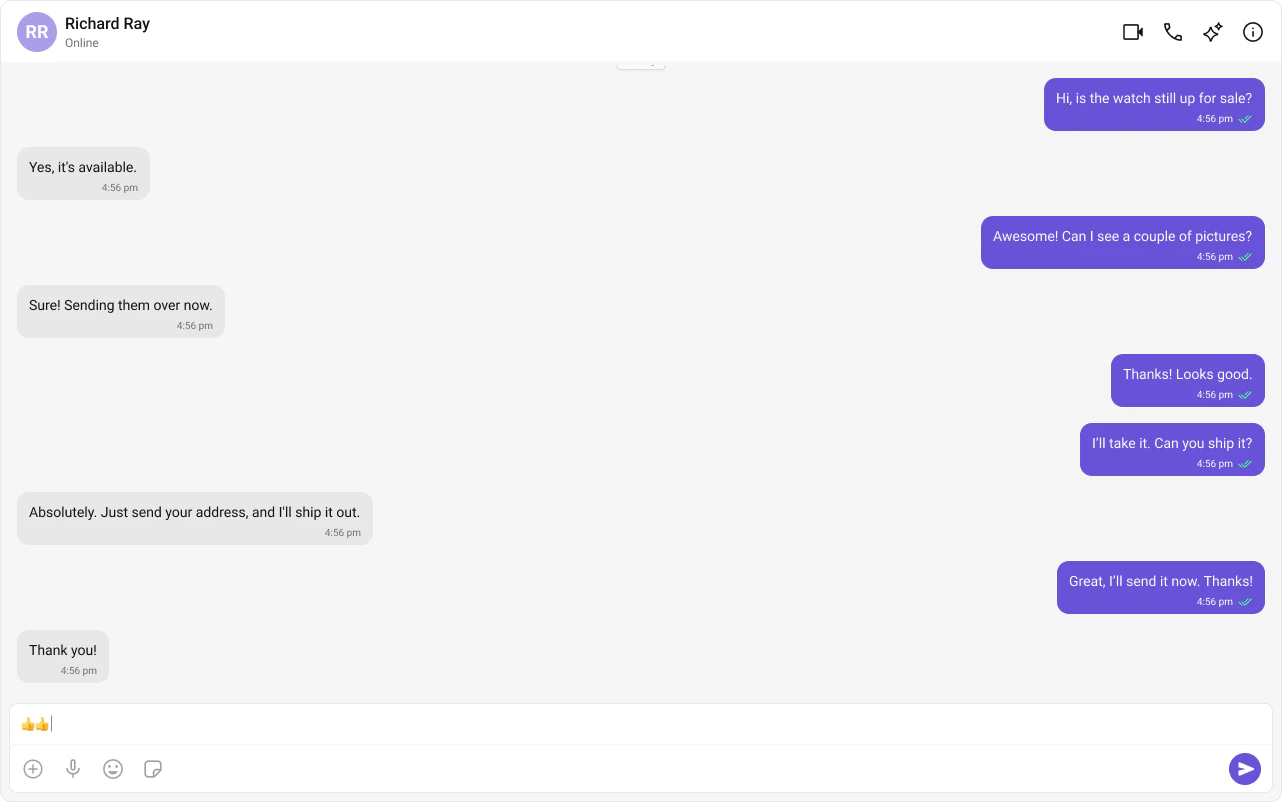
This guide builds a single chat window — no sidebar, no conversation list. Users go directly into a one-to-one or group chat. Good for support chat, embedded widgets, or any focused messaging experience. This assumes you’ve already completed React.js Integration (project created, UI Kit installed, init + login working, CSS imported).
Fork the sandbox, insert your CometChat credentials (App ID, Region, Auth Key), and preview the UI in real time.

What You’re Building

Three components stacked vertically:
  1. Chat header — displays recipient name, avatar, online status, and optional call buttons
  2. Message list — real-time chat history with scrolling
  3. Message composer — text input with media, emojis, and reactions
No new files to create — everything goes in App.tsx and App.css.

Step 1 — Update App.tsx and App.css

The app fetches a user (or group) on mount and renders the three message components.
App.tsx
import { useEffect, useState } from "react";
import {
  CometChatMessageComposer,
  CometChatMessageHeader,
  CometChatMessageList,
} from "@cometchat/chat-uikit-react";
import { CometChat } from "@cometchat/chat-sdk-javascript";
import "./App.css";
import "@cometchat/chat-uikit-react/css-variables.css";

function App() {
  const [selectedUser, setSelectedUser] = useState<CometChat.User | undefined>(undefined);
  const [selectedGroup, setSelectedGroup] = useState<CometChat.Group | undefined>(undefined);

  useEffect(() => {
    // Fetch the user whose chat you want to load
    const UID = "cometchat-uid-1";

    CometChat.getUser(UID).then(
      (user) => setSelectedUser(user),
      (error) => console.log("User fetching failed with error:", error)
    );

    // To load a group chat instead, uncomment below:
    // const GUID = "GUID";
    // CometChat.getGroup(GUID).then(
    //   (group) => setSelectedGroup(group),
    //   (error) => console.log("Group fetching failed with error:", error)
    // );
  }, []);

  return (
    <>
      {selectedUser || selectedGroup ? (
        <div className="messages-wrapper">
          <CometChatMessageHeader user={selectedUser} group={selectedGroup} />
          <CometChatMessageList user={selectedUser} group={selectedGroup} />
          <CometChatMessageComposer user={selectedUser} group={selectedGroup} />
        </div>
      ) : (
        <div className="empty-conversation">
          Set a user or group UID in App.tsx to start chatting
        </div>
      )}
    </>
  );
}

export default App;
Key points:
  • CometChat.getUser(UID) fetches the user object from the SDK — you need a real user object, not a manually constructed one.
  • Pass either user or group to the message components, never both.
  • The highlighted lines show where to set the UID or swap to group chat.

Switching Between User and Group Chat

To load a group chat instead of one-to-one, replace the getUser call with getGroup:
const GUID = "GUID"; // Replace with your actual Group ID

CometChat.getGroup(GUID)
  .then((group) => setSelectedGroup(group))
  .catch((error) => console.error("Failed to fetch group:", error));
You can also determine this dynamically — for example, based on a route parameter or a selection from another part of your app.

Step 2 — Run the Project

npm run dev
You should see the chat window load with the conversation for the UID you set.

Next Steps

Theming

Customize colors, fonts, and styles to match your brand

Components Overview

Browse all prebuilt UI components

React.js Integration

Back to the main setup guide

Core Features

Chat features included out of the box